Every time an autonomous agent stops to ask a routine question, it exposes a gap in the company’s operating knowledge. The model may be capable. The agent may have the right tools. But without a reliable account of how the organization works, autonomy ends at the first ambiguous decision.
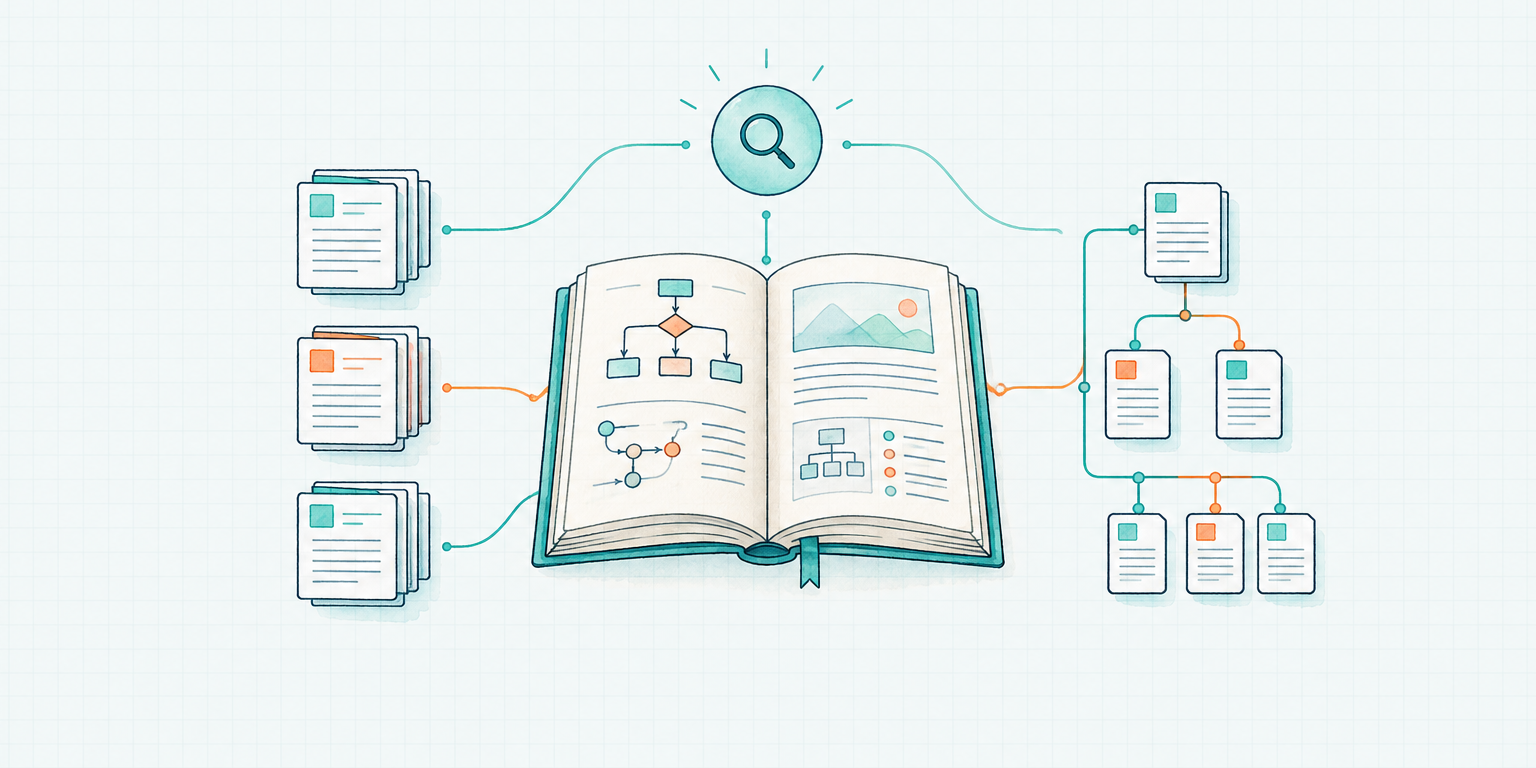
An AI agent knowledge base closes that gap. The useful version looks less like a larger prompt and more like a company handbook: searchable, versioned, maintained as work changes, and shared by people and agents.
Why a bigger prompt does not create more autonomy
A prompt is good at setting a role, goal, and boundaries for one run. It becomes a poor place to carry an entire company’s policies, terminology, workflows, and decisions.
More context can even work against the agent. Anthropic’s guide to effective context engineering for AI agents describes context as a finite resource. As the context window fills, an agent can become worse at finding and recalling the detail that matters. The objective is a small set of high-signal information, retrieved when the work requires it.
That changes the executive question. Instead of asking, “How much can we fit in the prompt?” ask, “Can the agent find the right operating guidance at the moment of decision?”
| Bigger prompt | Agent knowledge base | |
|---|---|---|
| Best for | Role, goals, immediate constraints | Durable company knowledge |
| Retrieval | Loaded all at once | Searched when needed |
| Change management | Easy to duplicate or overlook | Versioned and reviewable |
| Ownership | Often unclear | Named owner and human maintainer |
| Autonomy effect | Helps one run | Improves repeated decisions |
Treat the handbook as operating infrastructure
GitLab began its public handbook when the company had ten people so company information would remain accessible regardless of when someone joined. Its advantages are organizational: asynchronous reading, easier onboarding, visible diffs, and a process that lets anyone propose a change.
Autonomous agents need the same thing for the same reason. They cannot act independently if the organization’s real process lives in someone’s memory, a private Slack thread, or a meeting from six months ago.
A good handbook gives an agent the durable facts behind daily work:
- How a recurring process works
- Who owns a decision and when to escalate
- Which terms the company uses and what they mean
- What “done” looks like for a role
- Which safeguards apply before changing customer or company data
- Why a standing decision exists
Octavus describes the Handbook as a shared reference for how an organization operates. Over time, it can become “the source code for how your organization operates.” That metaphor matters. Source code is durable, reviewable, and designed to produce consistent behavior. A chat transcript is none of those things.
Separate operating knowledge from work in progress
The fastest way to ruin an AI agent knowledge base is to put everything in it.
A handbook should contain guidance that remains useful across future runs. A process, decision rule, definition, or escalation path belongs there. The status of today’s campaign, a one-off customer request, and a temporary workaround belong with the work itself.
This source-versus-state boundary keeps the knowledge base accurate enough to trust. It also makes retrieval cleaner. When an agent searches for the expense approval process, it should find the governing rule, not forty stale updates from individual reimbursements.
Octavus Agents use several context layers for that reason. Our guide to AI agent memory explains how short-term memory, long-term memory, and notes preserve recent activity, durable private facts, and detailed records. The Handbook holds shared operational guidance. Each layer has a different job.
Build for retrieval, change, and trust
A folder full of documents is only a starting point. Three operating properties determine whether it increases autonomy.
1. The agent can retrieve the relevant section
The knowledge base should support meaning-based search, not depend on exact keywords or a person knowing where a page lives. In Octavus, an Agent can search the Handbook semantically and return the most relevant sections regardless of its size.
This enables progressive disclosure. The agent begins with its role and current task, then pulls in the page needed for the next decision. Company context becomes navigable instead of preloaded.
2. Every change leaves a trail
Guidance will change. The knowledge base needs revision history, a reason for each edit, and the ability to restore an earlier version. Those controls let an agent use current instructions while giving leaders a clear answer when they ask what changed.
GitLab frames this benefit simply: communicating a change is easier when people can point to the diff. The same is true for agents.
3. People remain accountable for shared rules
Autonomy does not require anonymous documentation. Each important page should have an owner and a human maintainer. Octavus Handbook pages support ownership, maintainers, revision history, and restore, so Agents can improve guidance while people retain supervision.
This is how documentation stays alive. The agent finds an outdated step during real work, proposes or makes a focused update, records the rationale, and triggers review. The knowledge base improves through use rather than waiting for a quarterly cleanup.
A practical executive checklist
Before giving an agent a recurring responsibility, test the knowledge environment around it:
- Can a new teammate find the process without asking its author? If not, the agent will escalate too.
- Does the guidance explain decisions, not only steps? Agents need criteria for edge cases.
- Can the agent retrieve one relevant section without loading everything? Search quality affects decision quality.
- Are pages versioned, owned, and reviewed? Trust depends on knowing which rule is current and who stands behind it.
- Can the agent improve the handbook after learning something durable? A read-only archive decays faster than a maintained operating manual.
The payoff is visible in the escalation rate. When routine questions fall, the agent spends more time completing work and less time reconstructing how the company operates.
Structure before autonomy
Executives often evaluate agents by model capability. In practice, autonomy is constrained by the environment around the model: access to tools, clear authority, durable memory, and usable operating knowledge.
A handbook turns company context into something an agent can search, apply, and improve. It gives people and agents the same reference point, while revision history and human maintainers keep that shared understanding accountable.
The first agent you onboard will show you where the organization relies on tribal knowledge. Document those gaps as durable guidance. The second agent will start with more autonomy than the first.
Getting Started
Start with one recurring role and the five pages it needs most: responsibilities, workflow, decision rules, escalation path, and definition of done. Use the Octavus onboarding guide to give the agent company context, role clarity, relationships, and approved access.
Then discover an Octavus Agent for a real function and give it a maintained operating handbook, not a longer prompt.
Give an autonomous teammate the context and access to do real work.