An autonomous agent that forgets what happened yesterday can still answer questions. It cannot own a job.
AI agent memory gives an agent continuity across tasks, sessions, and weeks. The right memory system keeps the current job in view, preserves durable facts, and stores detailed records without crowding every decision. That is how an agent stops needing the same briefing over and over.
What is AI agent memory?
AI agent memory is the system an agent uses to save, retrieve, update, and discard information as it works. It carries useful context beyond a single prompt, so the agent can continue a task, remember a decision, and apply a lesson later.
A model's context window is temporary working space. A long conversation, a large file, or a series of tool results can fill it. Anthropic's guidance on context engineering treats that space as a finite resource: agents work better when they keep only what matters in working memory and use notes for persistence.
Humans already operate this way. Working memory holds a limited amount of information for immediate reasoning. Long-term memory carries knowledge beyond the present moment. Calendars, notebooks, and shared documents preserve details we do not need to hold in our heads.
A useful AI agent memory architecture follows the same division of labor.
The four parts of autonomous agent memory
1. Short-term memory keeps the current work coherent
Short-term memory holds recent activity: the goal, the last steps completed, an email just sent, a file under review, or a decision made earlier in the thread.
This is the agent's working desk. The information needs to be close at hand while the task is active. Most of it does not deserve permanent storage.
Without short-term memory, long tasks fracture. The agent repeats steps, loses the original goal, or asks questions that were answered minutes ago. With it, the agent can resume after an interruption and explain where the work stands.
2. Long-term memory preserves durable facts
Long-term memory contains compact facts that should influence future work:
- A leader prefers concise weekly updates.
- The company uses a specific positioning statement.
- A customer has an agreed escalation path.
- A recurring report follows a defined format.
- A past mistake should not be repeated.
The word compact matters. Long-term memory works best as a small set of current truths, not an archive of everything the agent has ever seen.
That distinction is appearing across production memory systems. Amazon Bedrock AgentCore separates short-term context from long-term knowledge, then extracts useful facts, preferences, and summaries for later sessions. The exact implementation varies, but the operating principle is stable: durable memory should preserve what changes future decisions.
3. Notes keep detail available on demand
Some information is important but too large or specialized to load into every task. Research findings, meeting notes, activity logs, and completed deliverables belong in searchable records.
Notes act like a filing cabinet. The agent knows the material exists and retrieves it when the job calls for it. This keeps routine work focused while preserving the evidence behind past decisions.
The separation also improves review. A manager can inspect a concise long-term memory for standing facts, then open a detailed note when the history matters.
4. Consolidation keeps memory useful
Memory accumulates. Recent activity becomes stale, repeated facts create noise, and old decisions get replaced.
A maintenance process should regularly:
- Remove low-value recent information.
- Promote durable lessons into long-term memory.
- Move detailed history into notes or logs.
- Merge duplicates.
- Correct or retire facts that no longer hold.
This is closer to sleep than storage. The system is not merely saving information. It is deciding what deserves to shape tomorrow's work.
Octavus Agents use a built-in Sleep task to consolidate recent memories, preserve what matters, and keep future context clean. The agent maintains the system as part of its normal schedule instead of waiting for a manager to clean it up.
Why memory increases autonomy
Every missing memory becomes a management task.
If the agent cannot remember a preference, someone repeats it. If it cannot find the last decision, someone reconstructs the history. If it forgets what happened during yesterday's run, someone supervises the restart.
A layered memory system removes those small interventions. The agent can:
- Continue multi-day work without a fresh briefing.
- Apply company conventions consistently.
- Avoid contacting the same person twice.
- Recognize when a new request conflicts with an earlier decision.
- Carry lessons from one run into the next.
- Escalate with the relevant history already assembled.
This is the business value of long-term memory for AI agents. Better recall matters, but continuity matters more. A role becomes delegable when the agent can return to it with the right context and make progress.
Autonomous agents need memory alongside a computer, credentials, triggers, and observability. Memory is the piece that lets those capabilities compound rather than reset.
More context is not better memory
A common shortcut is to place every instruction, conversation, and document into one enormous prompt. The agent receives more information but has a harder time finding what matters.
This creates three problems:
- Noise: stale details compete with the current goal.
- Drift: old facts remain available after the business has changed.
- Risk: sensitive information is carried into tasks that do not need it.
Selective memory is stronger. Keep the current task close, durable facts concise, and detailed records searchable. Give each layer an owner and a retention rule.
AI agent best practices should also apply here: store only what the role needs, make consequential facts reviewable, and define how corrections propagate.
An executive checklist for AI agent memory
You do not need to evaluate databases or retrieval algorithms. Ask whether the operating system around the agent answers these questions:
- Continuity - Can the agent resume recent work after a new session or interruption?
- Durable knowledge - Does it preserve compact facts and preferences that should influence future decisions?
- Detailed records - Can it retrieve research, logs, and past deliverables without loading them into every task?
- Maintenance - Does it consolidate, deduplicate, and retire stale information on a schedule?
- Correction - Can a person review and update what the agent believes?
- Scope - Is memory separated by role, customer, or workspace where needed?
- Retention - Can sensitive or temporary information expire instead of living forever?
- Traceability - Can you see which memory affected a consequential action?
A system that only saves chat history will struggle with this checklist. Autonomous agent memory needs a lifecycle: capture, classify, retrieve, consolidate, correct, and forget.
How Octavus Agents manage memory
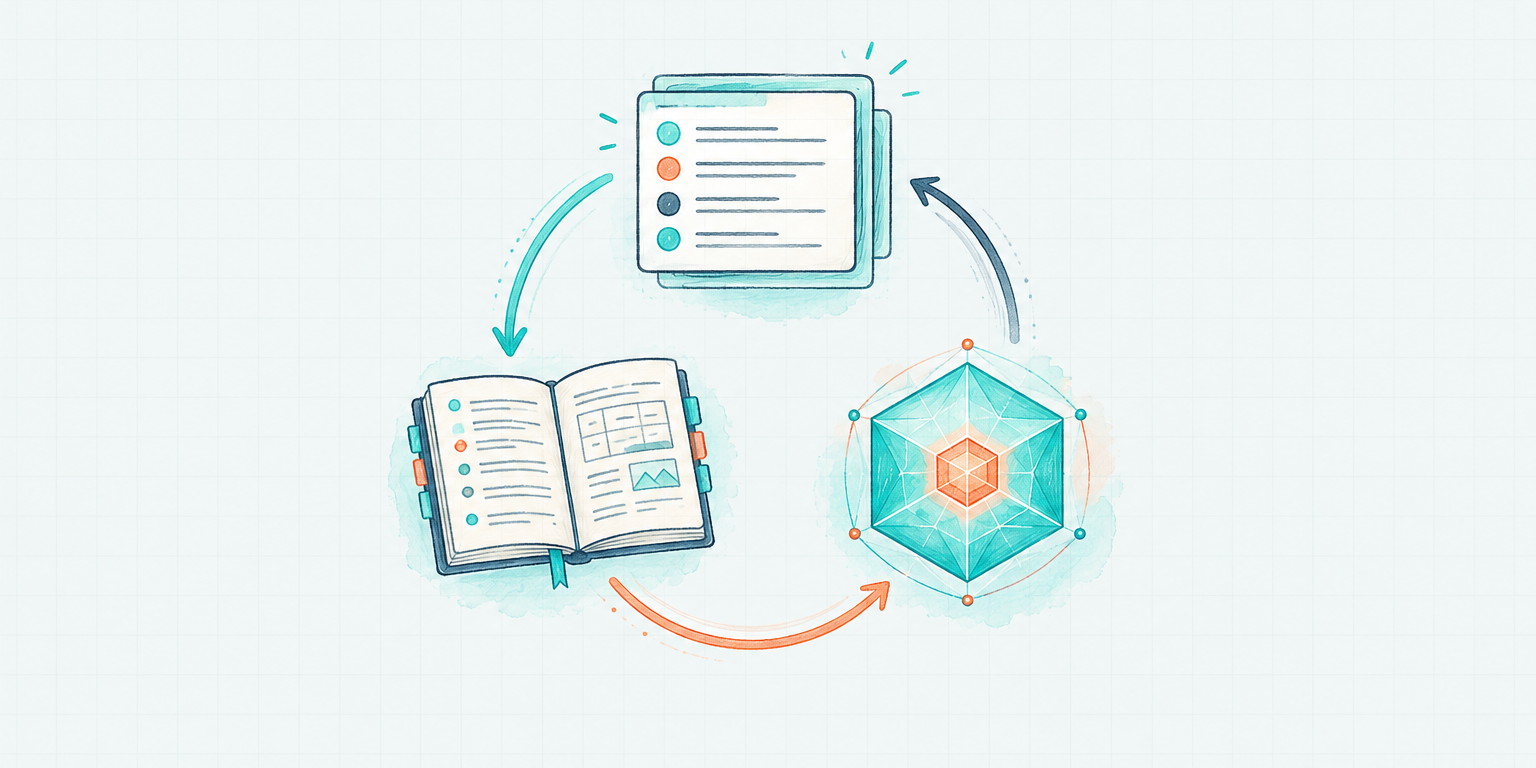
Octavus Agents use three complementary stores: short-term memory for recent context, long-term memory for durable facts, and notes for detailed reference material. Both short-term and long-term memory are available while the Agent works. Notes are retrieved when the detail is needed.
The Types of Agent Memory guide shows how the layers fit together. Each Agent can build and maintain its own memory while people retain visibility and editing control.
The result feels less like reopening a chatbot and more like checking in with a colleague who remembers the work, knows where the records live, and has cleaned up yesterday's desk.
Getting Started
Start with one recurring responsibility. Give the agent the context for the current task, identify the few facts that should remain true next week, and keep detailed history in a searchable note or log. Then review what the agent retains after several runs.
Browse pre-built Octavus Agents to hire an autonomous agent with built-in memory, or read the Octavus documentation to build on the platform.
Give an Agent a real role, the right context, and room to build useful continuity over time.