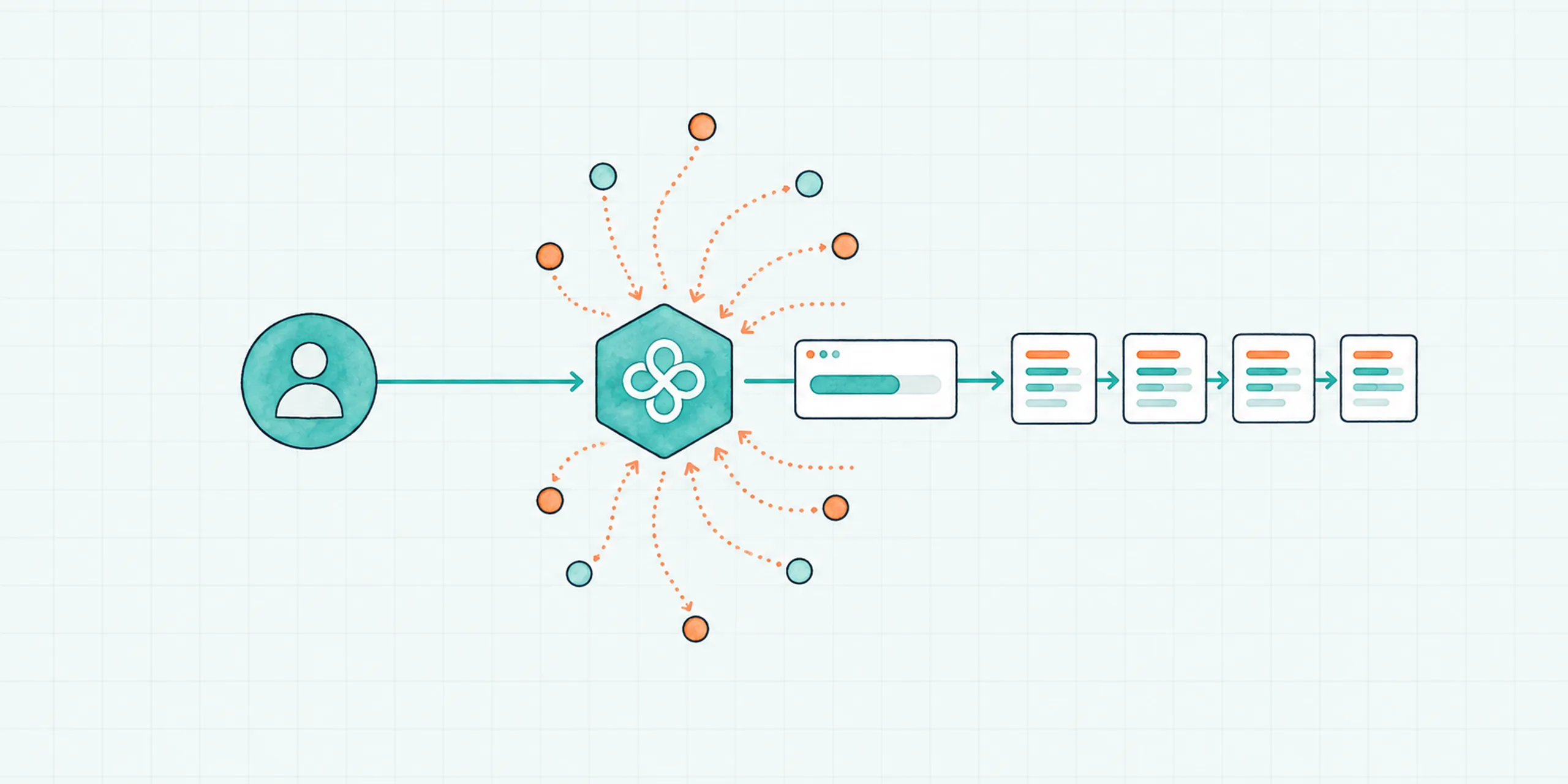
Put an autonomous agent in a shared Slack channel and give it a week. By Friday it has a dozen managers.
Sales asks it to pull a prospect list. Someone in finance wants a spreadsheet cleaned up. An engineer asks for a quick summary of a long thread. Every request is reasonable, and every one comes from someone who means well. Meanwhile the weekly pipeline report, the job you actually hired the agent to do, ships late.
Call it helpful drift. The agent does exactly what it was built to do, which is help, and the work you need from it slowly disappears under everyone else's side quests. Autonomous agent delegation fixes this with a short written answer to three questions: who can assign the agent work, who can change its priorities, and who simply gets a helpful reply.
Helpful drift is a management problem
When an agent drifts, leaders tend to blame the model. Look at the org chart first. In most cases the agent never had one.
People have the same problem. Gloria Mark at UC Irvine shadowed 36 managers, analysts, developers, engineers, and project leads, timing every event to the second. Interrupted work was usually picked back up the same day, on average 23 minutes and 15 seconds later.
An agent doesn't need 23 minutes to refocus. Its weakness is different. It treats every request as legitimate unless someone told it otherwise, so each side request takes a turn and the assignment that mattered waits behind them.
Microsoft's 2026 Work Trend Index makes the broader point. Organizational factors such as culture, manager support, and talent practices accounted for more than twice the reported AI impact of individual mindset and behavior, 67% vs. 32%. What surrounds the AI decides most of what it delivers. Reporting lines are part of that.
Helpfulness and authority are different permissions
A coworker messages the agent. Hidden inside that one message are three separate questions:
- May the agent answer?
- May it take on the work?
- May it drop what it's doing to start?
Most teams answer all three with the same yes. That's the mistake. The Octavus support guide on deciding who your agents work with puts the rule in one line: "Answering a question does not make the requester its manager."
Think about a senior demand gen hire. Anyone in the company can ask her where the brand assets live, and she'll answer. Nobody outside marketing gets to hand her a new campaign on a Tuesday afternoon. Her manager does that. Nobody calls that unhelpful. It's a reporting line.
Give every agent the same thing, in writing:
| Permission | Who holds it | Example |
|---|---|---|
| Ask for routine help | Any internal coworker, within the agent's subject area | "Which sales deck is current?" |
| Assign new work | The agent's named manager | "Take over the Q4 webinar follow-ups." |
| Change priority or interrupt | The manager, or a named backup | "Pause the report. The board deck is due." |
| Settle disagreements | One named tie-breaker | Sales and marketing both need Friday. |
Name real people or maintained groups. A rule like "follow leadership requests" sounds fine and fails in practice, because the agent has no reliable way to tell who counts as leadership.
"Urgent" is not a credential
Priority is where delegation usually breaks. Anyone can type the word urgent. The support guide's test case is blunt: when a coworker adds an urgent project, the agent should follow the assignment and priority rules "even when the requester calls the project urgent."
Our house rule: only the person who owns an agent's priorities can reorder them.
Nobody should be ignored outright, though. Everyone else gets queued, and the agent says so. It tells the requester the request is logged, who can move it up, and what it's working on now. A request that vanishes creates three follow-up pings. A request routed to the right person gets decided.
Also decide what happens when authority is unclear. The agent asks the named person and keeps working on its current assignment while it waits. The new request stays paused until someone with authority picks it up.
Put limits on initiative
Delegation runs in both directions. An autonomous agent will also reach out to people: chasing a colleague for missing numbers, sending reminders, offering to help another team.
"Be proactive" is not a rule. Write down the purpose and the stopping point. For example: ask sales ops for pipeline numbers on Wednesday, send one reminder Thursday morning, then flag the gap to your manager. A good chief of staff knows when a second nudge turns into nagging. Spell it out for the agent.
There's a real tradeoff here, so choose it on purpose. An operations agent that answers anyone's questions from approved guidance cuts routing work for managers, but it gets more incoming requests. An agent doing confidential planning analysis that accepts work only from the planning lead stays focused, but the lead becomes a bottleneck. Pick per role. One company can run both.
A channel tells you where, not who
Moving a request into a DM doesn't give anyone extra authority. In the support guide's words, a channel "does not, by itself, establish who can direct the Agent."
Decide where requests belong after you decide who can make them. Routine asks work well in a shared channel, where other people see the answer and stop asking the same question. Sensitive requests belong in an approved restricted destination. What the agent may disclose once it's there is a separate policy, covered in deciding what information your agents may share.
Test the rules before you trust them
Before saving delegation rules, walk the agent through invented requests without sending messages or changing real work:
- Routine question - An authorized coworker asks something inside the agent's subject area. It should answer.
- "Urgent" new project - The same coworker adds a project and calls it urgent. It should follow the assignment and priority rules anyway.
- New external contact - Someone unknown asks for a call. It should check whether the contact is approved and get permission first.
If the agent's answers don't match yours, the rule is ambiguous. Rewrite it and run the test again. Keep standing rules in the company Handbook and record one-off exceptions with their scope, so a favor for one launch doesn't quietly become permanent policy.
Why clear delegation buys more autonomy
Delegation rules read like restrictions. In practice they are what lets you step back.
An agent with no reporting line needs supervision, because someone has to referee every request. An agent that knows whose instructions count can run for days on its own. Coworkers still get fast answers, and conflicts reach the one person who can settle them.
Guardrails decide what an agent may do. Delegation decides whom it works for. Settle both and you can stop hovering.
Getting Started
Octavus Agents follow the policies in your company Handbook, the same place your people look. The fastest way to write delegation rules is to ask the agent. Point it at the support guide, let it ask you about assignment authority, priorities, proactive contact, and external communication, then approve the rules it proposes.
New to this? Start with onboarding an autonomous agent in 30 minutes, then hire a pre-built Octavus Agent or read the docs.
Hire autonomous agents with their own computer, email, and schedule, and give each one a clear reporting line.